
Flooring That Handles Everyday Wear and Lifestyle Demands
Flooring installation in Coeur d'Alene for homes requiring durable surfaces that match function to daily use patterns
Flooring fails when subfloors flex, moisture barriers get skipped, or materials mismatch the room's exposure conditions—you see gaps opening between planks, tiles cracking along grout lines, or laminate edges lifting near doorways. Majestic Builders LLC installs tile, hardwood, and laminate flooring in Coeur d'Alene, Post Falls, Hayden, Rathdrum, Athol, and Dalton Gardens for remodels, additions, and basement projects where the existing surface no longer performs. Proper installation starts with subfloor evaluation and ends with a surface that remains stable under furniture weight and foot traffic.
The process begins with removing old flooring and inspecting the subfloor for levelness, moisture content, and structural integrity, because installing over compromised substrates transfers every defect to the new surface. Hardwood requires acclimation to interior humidity levels before installation to prevent seasonal expansion issues, laminate needs underlayment with moisture barriers in below-grade applications, and tile demands a rigid substrate that won't deflect. Material selection depends on the room's function—high-traffic areas benefit from harder surfaces, while bedrooms tolerate softer options.
Arrange an on-site flooring estimate to review material options and subfloor conditions specific to your project.
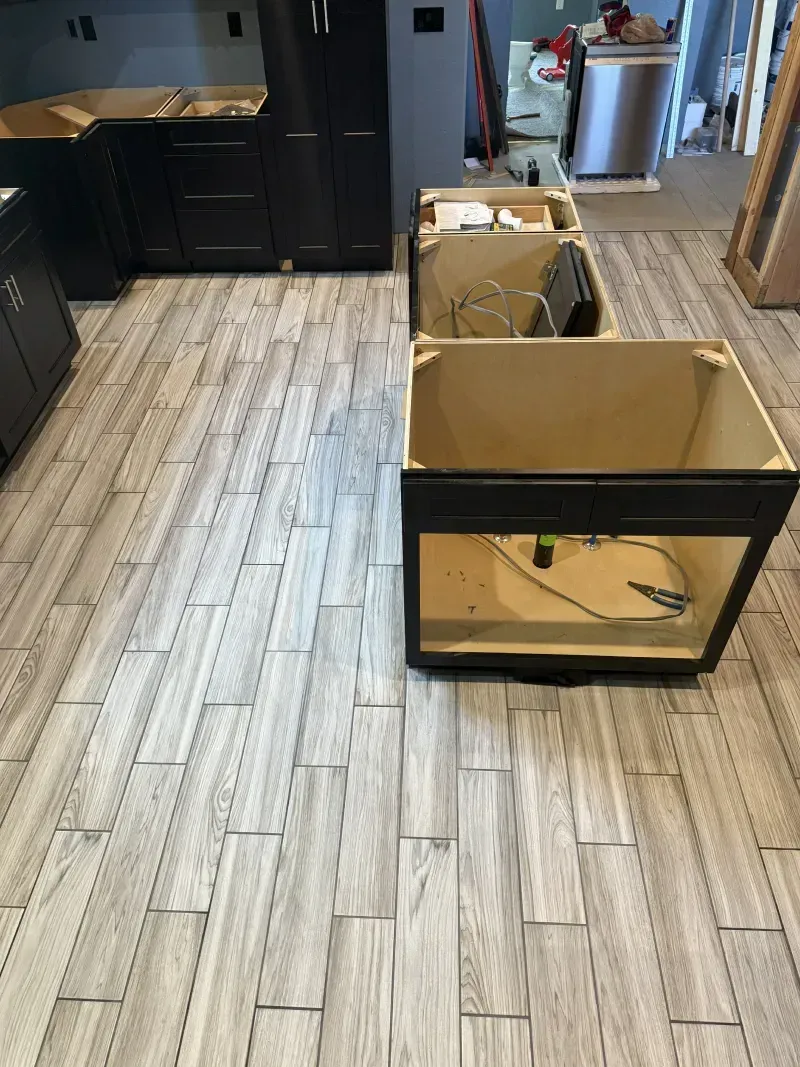
How Flooring Installation Addresses Long-Term Performance
Installation quality determines whether flooring survives years of use or develops problems within months, and that quality depends on substrate preparation, expansion gap planning, and fastening methods matched to the material type. Engineered hardwood gets glued or floated depending on the subfloor, solid hardwood requires nail-down installation over wood substrates, and laminate flooring clicks together with underlayment that dampens sound and blocks moisture migration from concrete slabs.
After installation, the floor sits level without dips or high spots, transitions between rooms align without lips that catch feet, and the surface feels solid when you walk across it. Gaps no longer appear along walls where planks have shifted, seasonal humidity changes don't cause buckling because expansion space was built into the perimeter, and the finish remains consistent without wear patterns showing prematurely. Durability shows up in how the floor responds to dropped objects, furniture movement, and cleaning routines.
Flooring installations in basements and additions require attention to moisture sources that don't affect upper levels—concrete slabs need vapor barrier testing before any flooring goes down, and below-grade spaces may need subfloor ventilation or moisture mitigation systems. Style selection affects maintenance requirements, with textured surfaces hiding minor scratches better than high-gloss finishes, and darker colors showing dust more readily than mid-tone options.
Common Questions About Flooring Projects
Property owners preparing for flooring installation typically want to understand material performance, installation requirements, and long-term care before making decisions.
What determines whether hardwood or laminate works better for a specific room?
Hardwood tolerates refinishing and handles moderate moisture if finished properly, making it suitable for main living areas, while laminate resists scratches and costs less but cannot be refinished, which makes it practical for high-traffic zones where replacement is easier than repair.
How does subfloor preparation affect the installation timeline?
Subfloor leveling, moisture barrier installation, and structural repairs add time before flooring begins, but skipping these steps causes failures later—a subfloor more than a quarter inch out of level over ten feet will telegraph through laminate and cause tile to crack.
When does flooring need acclimation before installation?
Hardwood and engineered wood products require acclimation to match the interior humidity level, typically seventy-two hours minimum in the installation space, because wood expands and contracts with moisture content changes, and installing material that hasn't stabilized leads to gaps or buckling.
What maintenance extends the life of installed flooring?
Regular sweeping removes abrasive grit that scratches finishes, immediate cleanup of spills prevents moisture damage and staining, and using furniture pads under chair legs and table bases stops indentations in softer flooring materials.
Why do flooring installations in Post Falls and surrounding areas require attention to seasonal humidity swings?
North Idaho experiences significant humidity variation between winter heating cycles and summer conditions, which causes wood-based flooring to expand and contract—installations must include expansion gaps along perimeters and use fastening methods that allow controlled movement.
Majestic Builders LLC provides material selection guidance and flooring installation for residential projects throughout the region. Contact our office to schedule an estimate that includes subfloor assessment and material comparison based on your space and usage needs.