Outdoor Spaces Built for Seasonal Exposure
Deck construction in Hayden for properties requiring durable outdoor living areas that connect interior spaces to exterior environments
North Idaho's seasonal weather cycles—snow load in winter, UV exposure in summer, and moisture from rain and snowmelt—degrade deck materials that aren't selected and installed to handle those conditions. Majestic Builders LLC builds decks in Hayden, Post Falls, Coeur d'Alene, Rathdrum, Athol, and Dalton Gardens using materials suited for freeze-thaw cycles and moisture exposure that occurs throughout the year. A properly constructed deck provides stable outdoor living space that increases usable square footage and creates areas for entertaining, dining, and seasonal activities without requiring constant maintenance or premature replacement.
Deck construction begins with foundation planning that accounts for frost depth and soil bearing capacity, then progresses through framing that supports anticipated loads and decking installation that sheds water while resisting rot. Treated lumber, composite decking, and PVC materials each respond differently to temperature swings and moisture—treated lumber requires regular sealing, composite resists rot but expands with heat, and PVC maintains dimensional stability but costs more upfront. Railing systems must meet code height requirements while complementing the home's exterior style.
Request a deck design consultation to discuss size, material options, and integration with your home's existing exterior features.
What Changes After Deck Construction Completes
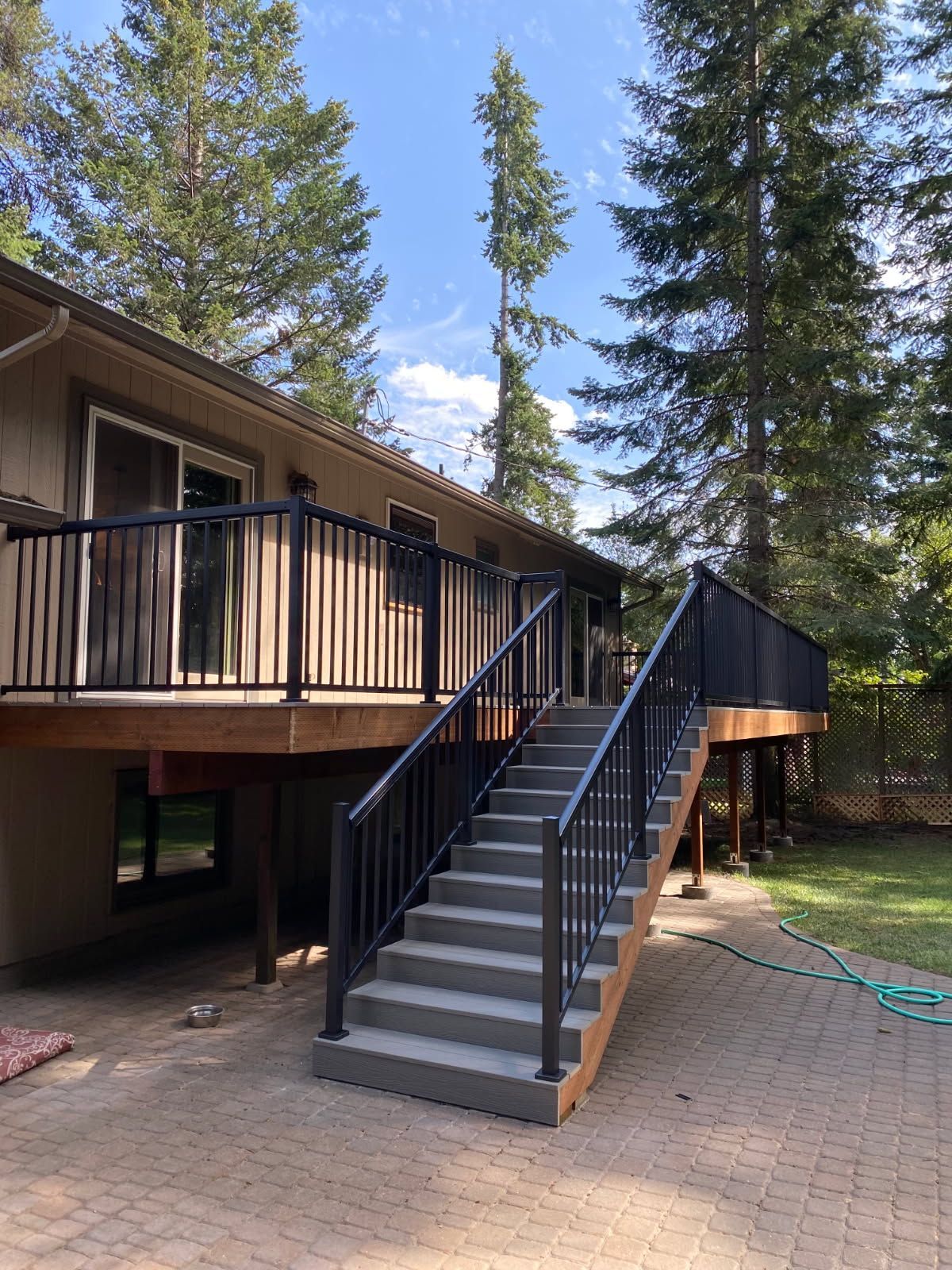
The structure must transfer loads safely to the foundation, shed water away from the ledger board attachment, and provide a level surface that remains stable across the span without bouncing or sagging. Footings extend below the frost line to prevent heaving during freeze-thaw cycles, joists receive proper spacing to prevent deck boards from flexing underfoot, and flashing protects the ledger connection where the deck attaches to the house to stop water infiltration that causes rot in both the deck frame and the building's rim joist.
Once construction finishes, you gain outdoor space that functions as an extension of interior living areas—doors open directly onto a stable platform that handles furniture, grills, and foot traffic without movement or noise. Water drains between deck boards instead of pooling, snow clearing becomes straightforward because the surface sits level, and the structure remains visibly square with railings that feel solid when gripped. Property value increases because the home offers functional outdoor space that buyers expect in the region.
Deck projects often coordinate with other exterior upgrades like siding replacement or window installation, allowing scheduling efficiency and visual consistency across the home's exterior. Stairs require precise rise and run calculations to meet code and provide safe access, and landings may be needed depending on elevation changes between the deck surface and ground level. Material selection affects long-term costs—composite decking eliminates staining and sealing but requires higher initial investment compared to treated lumber that needs maintenance every few years.
Answers to Frequent Deck Questions
Homeowners planning deck construction in the region typically ask about material durability, structural requirements, and maintenance expectations before projects begin.
What makes composite decking perform differently than treated lumber?
Composite decking resists rot and insect damage without chemical treatment, eliminates the need for annual sealing, but expands and contracts more with temperature changes than wood, requiring specific gap spacing during installation to prevent buckling in summer heat.
How do frost depth requirements affect deck foundation planning in North Idaho?
Footings must extend at least thirty-six inches below grade to reach stable soil below the frost line, preventing the foundation from heaving when ground moisture freezes and expands during winter, which would shift the entire deck structure.
When does a deck require a permit and inspection?
Most jurisdictions require permits for decks attached to the home or exceeding certain height thresholds, and inspections verify that footings, framing, ledger attachment, and railing meet structural codes before the project closes out.
What regular maintenance keeps a deck functional over time?
Treated lumber decks need cleaning and sealing every two to three years to prevent moisture absorption and UV degradation, composite decks require periodic cleaning to remove mold and mildew in shaded areas, and all decks benefit from annual fastener checks to retighten any screws or bolts that have loosened.
Why does ledger board attachment matter more than other framing connections?
The ledger board carries half the deck's live load and attaches the structure to the house, so improper fastening or missing flashing allows water to rot both the deck frame and the building's structural rim joist, leading to catastrophic failure if the ledger pulls away under load.
Majestic Builders LLC handles deck construction for homes across the Post Falls area and surrounding communities, integrating outdoor structures with existing architectural features and site conditions. Schedule a design estimate to review layout options, material choices, and structural requirements based on your property and intended use.