
Converting Unfinished Space Into Livable Square Footage
Basement finishing in Rathdrum for homes with unused lower levels that could function as bedrooms, offices, or family areas
Unfinished basements waste square footage that already exists within the home's foundation—concrete walls, exposed joists, and bare floors sit unused while homeowners need more living space. Finishing that space involves framing interior walls, installing insulation to control temperature, hanging drywall, adding flooring, and applying paint to create rooms that function like any other part of the house. Majestic Builders LLC completes basement finishing projects in Rathdrum, Post Falls, Coeur d'Alene, Hayden, Athol, and Dalton Gardens, converting below-grade areas into bedrooms, home offices, family rooms, and recreation spaces that add value and usability to properties throughout the region.
The process starts with assessing moisture conditions, foundation integrity, and egress requirements, because building finished rooms in a basement that lacks proper drainage or emergency exits creates safety and durability problems. Framing goes up against foundation walls using pressure-treated bottom plates that resist ground moisture, insulation fills wall cavities to prevent cold transfer from concrete, and drywall receives mold-resistant backing in areas prone to humidity. Flooring options include laminate, engineered hardwood, and tile depending on moisture levels and intended use.
Schedule a basement finishing consultation to evaluate your current space, discuss layout possibilities, and identify any preparatory work needed before construction begins.
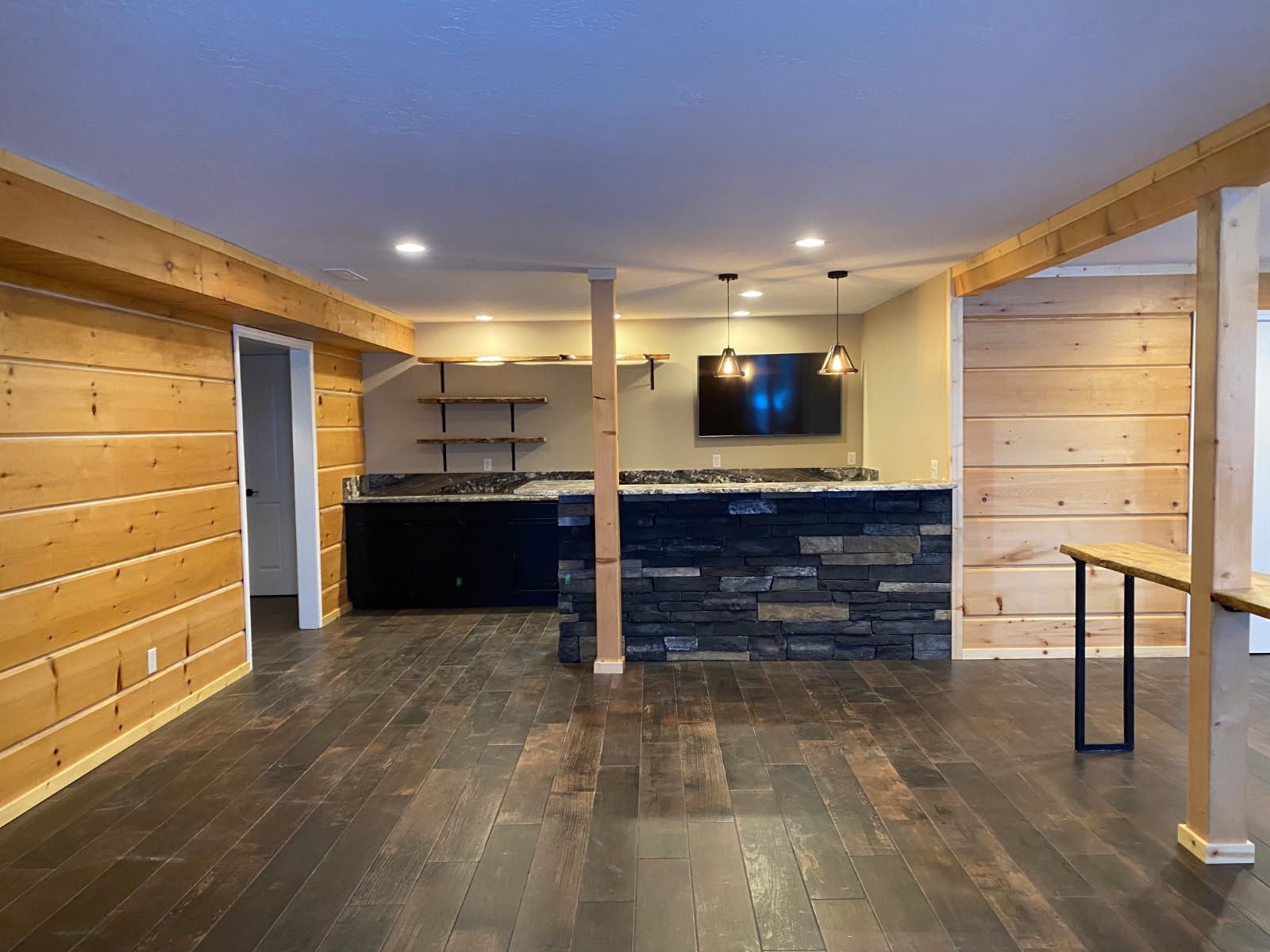
What You Notice Once Basement Finishing Is Complete
Finished basements require attention to moisture management that upper floors don't face, including vapor barriers on foundation walls, proper insulation that doesn't trap condensation, and flooring systems that tolerate higher humidity without warping or developing mold. Egress windows must meet minimum size requirements for bedrooms to provide emergency exits, and ceiling height regulations determine which areas can legally function as habitable space versus storage or mechanical rooms.
After finishing, the basement feels like conditioned living space instead of a cold storage area—walls are smooth and painted, floors are warm underfoot, and rooms are defined with doors and trim just as they are upstairs. Temperature stays comfortable year-round because insulation stops heat loss through foundation walls, lighting brightens spaces that were previously dim, and the area becomes suitable for daily activities instead of occasional use. Home value increases measurably because finished square footage counts in appraisals and appeals to buyers looking for additional bedrooms or flexible living areas.
Basement projects often include electrical upgrades to add outlets and lighting circuits, plumbing extensions if bathrooms are part of the plan, and HVAC modifications to condition the newly finished space. Layout planning must work around existing mechanicals like furnaces, water heaters, and support columns that can't be moved. Soundproofing considerations matter when bedrooms sit below main living areas, requiring insulation in floor joist cavities to reduce noise transmission between levels.
What Property Owners Usually Ask
Questions about basement finishing typically focus on moisture control, code compliance, and functional layout before construction begins.
What prevents moisture problems after basement walls are framed and finished?
Exterior foundation waterproofing and interior drainage systems stop water before it reaches finished spaces, vapor barriers on concrete walls block moisture transmission, and using mold-resistant drywall and pressure-treated framing materials prevents damage if minor moisture does occur.
How do egress window requirements affect bedroom placement in finished basements?
Bedrooms require windows with minimum opening dimensions and a maximum sill height above the floor to allow emergency exit, which often means cutting window wells into the foundation and installing larger windows than what currently exists in unfinished basements.
When does ceiling height become a limiting factor in basement finishing?
Building codes typically require seven and a half feet of clear ceiling height for habitable rooms, so homes with low basement ceilings may only be able to finish portions of the space, or must leave mechanicals and ductwork exposed to maintain code compliance.
What HVAC changes are needed when adding finished basement space?
Existing heating and cooling systems may lack capacity to condition additional square footage, requiring new supply runs, return air pathways, or equipment upgrades to maintain comfort in both the basement and upper levels without overworking the furnace or air conditioner.
Why do basements in Rathdrum and nearby areas often remain unfinished compared to homes in other regions?
Many homes in North Idaho were built with basements intended primarily for mechanicals and storage rather than living space, and finishing them later adds value by converting unused area into functional rooms that increase capacity without building additions.
Majestic Builders LLC provides basement finishing services that include framing, insulation, drywall, flooring, and paint for residential properties across the region. Contact our team to discuss layout options, code requirements, and project timelines based on your home's current basement configuration and your space needs.